An Unknown Page from the Life of Kazan Khan Muhammad-Amin
25.11.2025
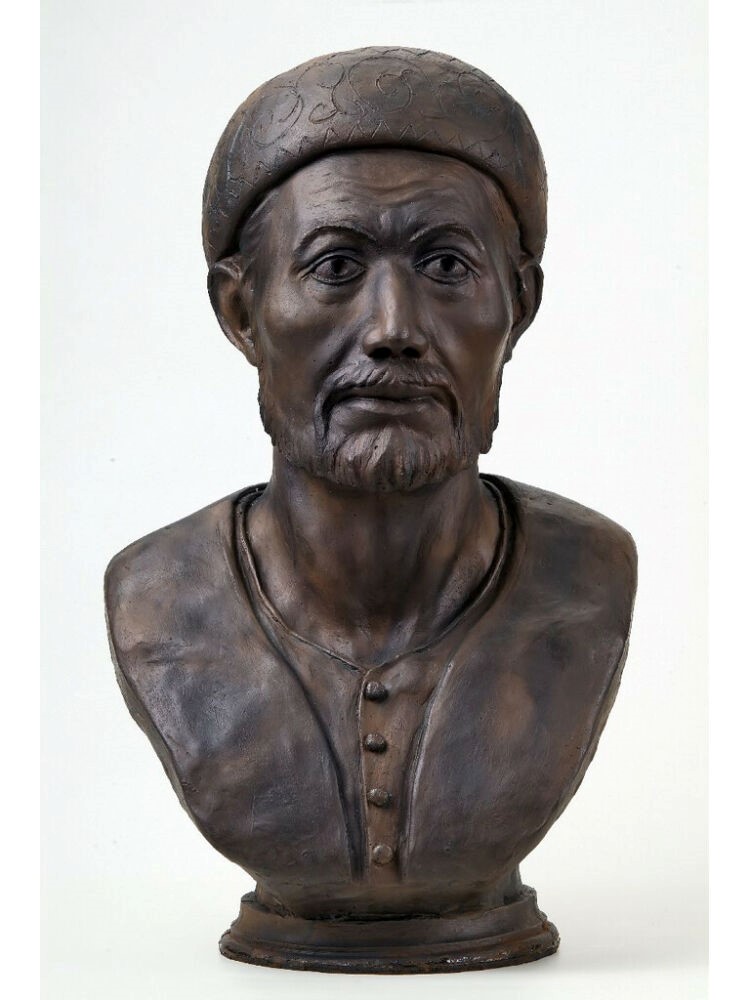
Source: https://sntat.ru/news/istoriya-praviteley-kazani-vozvraschenie-v-kazan-hana-
muhammed-amina-5632648
Authors of Tatar historical writings repeatedly noted the inclination of
Kazan Khan Muhammad-Amin (ruled in 1487-1495 and 1502-1518) toward poetic creativity.
In support of this assertion, one can cite the testimony of the 16th-century Iran-Tajik poet and literary figure from Herat, Fakhri Haravi—author of an anthology of poems by Muslim rulers entitled “Rawzat as-salatin” (“Garden of Sovereigns”). In it, he also mentioned the work of Khan Muhammad-Amin:
“Muhammad-Amin Khan. Muhammad-Amin Khan, sovereign of the Kazan vilayet, was a Padishah as modest as a dervish, endowed with a kind disposition and refinement. When Muhammad Khan Shaybani conquered Khorasan [in 913=1507/08],
<[Muhammad-Amin Khan] sent him congratulations and asked for himself as a gift from the conquered country a good man from among outstanding people>. The aforementioned Khan [Muhammad-Shaybani] sent him Ghulam-i Shadi and the master of the poetic meter “char-para” Bulbul. [Muhammad-Amin Khan]
surrounded them with perfect patronage.
The following incomparable poetic fragment belongs to him:
“The narcissus branch, proudly rising in the garden, is crowned with a
golden coronet;
The golden coronet brings suffering to the dervish with the belt [Sufi]”.
As it seems, here Khan Muhammad-Amin laments the burden of worldly
power, which brings him discomfort as a Sufi.
The book of Fakhri Haravi reports somewhat more detail than the
“Memoirs” of Babur, founder of the Great Mughal dynasty, about the contacts between the two khans: Kazan Muhammad-Amin and Uzbek Muhammad- Shaybani. Babur reports on the sending by Shaybani Khan to the court of
Muhammad-Amin only of the composer and performer Ghulam-i Shadi: “Among the music composers belonged also Ghulam-i Shadi, son of the singer Shadi.
Although he played instruments, he did not stand in the same row with those performers. He has good sauts and beautiful nakshes. At that time there was no person who composed so many nakshes and sauts. In the end, Shaybani Khan sent him to Kazan Khan Muhammad-Amin Khan; there were no more details about him.”
Haravi explains the circumstances of the appearance in Kazan of two figures of the arts from Herat. Undoubtedly, Ghulam-i Shadi (“Slave of Joy”) and Bulbul (“Nightingale”) are merely “artistic pseudonyms” of the Khorasanians.
The Uzbek writer Abdurrauf Fitrat, citing the work of the 16th-century poet and musician Darvish-Ali Changi “Tuhfat as-surur,” presents a somewhat different version of the musician Ghulam-i Shadi’s appearance in Kazan (whom he calls “Usta Shadi”). According to Changi’s version, the Timurid ruler of Khorasan Husayn Bayqara (died in 1506) sent the famous musician Usta Shadi to Kazan at the request of a certain Kazan khan. Upon arriving at the khan’s court, he recited one of the compositions he wrote in the style of “classical” (obviously, Iran- Muslim) music. Noticing that the khan understood nothing, at the same majlis he composed a melody that greatly pleased the ruler. Usta Shadi earned the
sovereign’s favor. However, according to legend, it was not his fate to live long in Kazan. Once, angered by the singer’s incautious word, the khan ordered him drowned…
Whose account—Babur’s, Haravi’s, or Changis—is closer to the truth is
difficult to say for now. Be that as it may, the story with the musician (or
musicians) who visited Kazan indicates that the centuries-old ties between the
Middle Volga region and Khorasan persisted into the 16th century.
Kazan Khan Muhammad-Amin (ruled in 1487-1495 and 1502-1518) toward poetic creativity.
In support of this assertion, one can cite the testimony of the 16th-century Iran-Tajik poet and literary figure from Herat, Fakhri Haravi—author of an anthology of poems by Muslim rulers entitled “Rawzat as-salatin” (“Garden of Sovereigns”). In it, he also mentioned the work of Khan Muhammad-Amin:
“Muhammad-Amin Khan. Muhammad-Amin Khan, sovereign of the Kazan vilayet, was a Padishah as modest as a dervish, endowed with a kind disposition and refinement. When Muhammad Khan Shaybani conquered Khorasan [in 913=1507/08],
<[Muhammad-Amin Khan] sent him congratulations and asked for himself as a gift from the conquered country a good man from among outstanding people>. The aforementioned Khan [Muhammad-Shaybani] sent him Ghulam-i Shadi and the master of the poetic meter “char-para” Bulbul. [Muhammad-Amin Khan]
surrounded them with perfect patronage.
The following incomparable poetic fragment belongs to him:
“The narcissus branch, proudly rising in the garden, is crowned with a
golden coronet;
The golden coronet brings suffering to the dervish with the belt [Sufi]”.
As it seems, here Khan Muhammad-Amin laments the burden of worldly
power, which brings him discomfort as a Sufi.
The book of Fakhri Haravi reports somewhat more detail than the
“Memoirs” of Babur, founder of the Great Mughal dynasty, about the contacts between the two khans: Kazan Muhammad-Amin and Uzbek Muhammad- Shaybani. Babur reports on the sending by Shaybani Khan to the court of
Muhammad-Amin only of the composer and performer Ghulam-i Shadi: “Among the music composers belonged also Ghulam-i Shadi, son of the singer Shadi.
Although he played instruments, he did not stand in the same row with those performers. He has good sauts and beautiful nakshes. At that time there was no person who composed so many nakshes and sauts. In the end, Shaybani Khan sent him to Kazan Khan Muhammad-Amin Khan; there were no more details about him.”
Haravi explains the circumstances of the appearance in Kazan of two figures of the arts from Herat. Undoubtedly, Ghulam-i Shadi (“Slave of Joy”) and Bulbul (“Nightingale”) are merely “artistic pseudonyms” of the Khorasanians.
The Uzbek writer Abdurrauf Fitrat, citing the work of the 16th-century poet and musician Darvish-Ali Changi “Tuhfat as-surur,” presents a somewhat different version of the musician Ghulam-i Shadi’s appearance in Kazan (whom he calls “Usta Shadi”). According to Changi’s version, the Timurid ruler of Khorasan Husayn Bayqara (died in 1506) sent the famous musician Usta Shadi to Kazan at the request of a certain Kazan khan. Upon arriving at the khan’s court, he recited one of the compositions he wrote in the style of “classical” (obviously, Iran- Muslim) music. Noticing that the khan understood nothing, at the same majlis he composed a melody that greatly pleased the ruler. Usta Shadi earned the
sovereign’s favor. However, according to legend, it was not his fate to live long in Kazan. Once, angered by the singer’s incautious word, the khan ordered him drowned…
Whose account—Babur’s, Haravi’s, or Changis—is closer to the truth is
difficult to say for now. Be that as it may, the story with the musician (or
musicians) who visited Kazan indicates that the centuries-old ties between the
Middle Volga region and Khorasan persisted into the 16th century.