A History of the Hajj among the Kazan Tatars in the 18th Century
01.10.2025
The organization of the Hajj was historically considered the prerogative of the most powerful ruler in the Islamic world. From the 16th century onward, this responsibility passed to the Ottoman sultans.
Prior to the establishment of regular steamship and railway services, the journey to Islam’s holy sites was fraught with considerable difficulty and danger. Consequently, pilgrims undertaking the Hajj would assemble into large caravans. One of the largest and most well-protected caravans was the procession of the “Emin of the Exalted Surrah”—a government official charged with the security of the sultan’s gifts to Mecca and the safety of the entire caravan. The retinue of the Emin of the Surrah would depart from Üsküdar, the Anatolian quarter of Istanbul. Here, pilgrims would gather from the European and Asian provinces of the Ottoman Empire (Rumelia and Anatolia), the Crimea, the Caucasus, and Russia (for instance, the distinguished Tatar theologian Abu Nasr al-Qursawi, who died in 1812 en route to the Hajj, is buried in Üsküdar).
The routes taken by pilgrims from the Middle Volga region and the shrines they visited along the way are described in itineraries that have survived to the present day, known as hajj-namehs. For example, we possess the travel notes of a hajji from the Zakazanye region named Muhammad-Amin ibn Gumar, who performed the Hajj between 1783 and 1786/87. His hajj-nameh was published in the 19th century.1
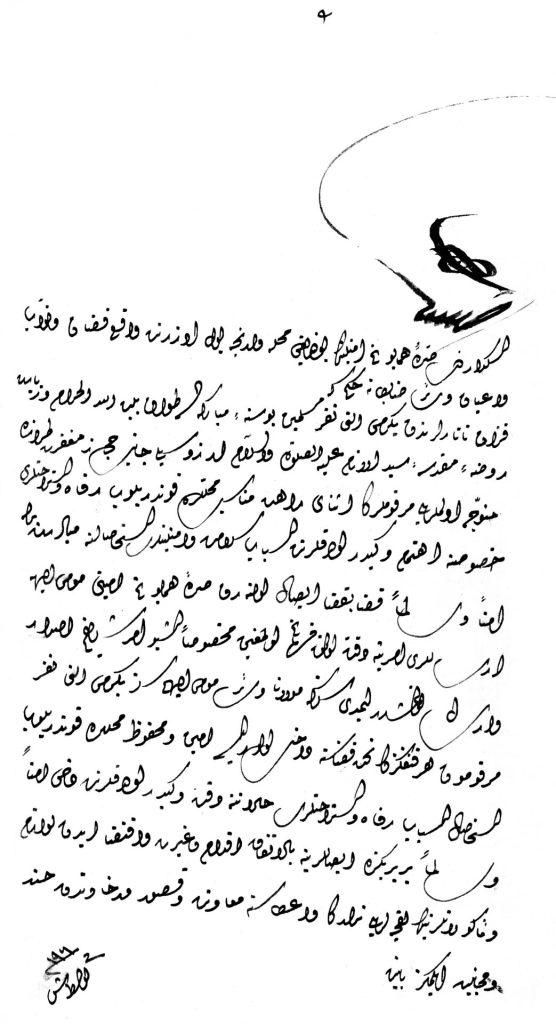
As evidenced by the text of a sultanic decree, in 1782, a group of Tatar pilgrims missed the departure of the caravan accompanying the surrah. The sultan’s decree was issued to facilitate their swift passage to catch up with it.
1196 A.H., 2nd Decade of Sha’ban = 1782 A.D., from July 11 to July 20. — A draft sultanic decree, approved by the Grand Vizier, addressed to officials stationed along the route from Üsküdar to the caravan bearing the sultan’s gifts to Mecca and Medina, concerning the safe passage of 26 Kazan Tatars journeying for the Hajj until they join the caravan.
In the Name of Allah!
A decree to the qadis, deputies, notables, and other officials stationed along the route from Üsküdar to the location of the Emin of My Exalted Surrah.
Twenty-six Muslim individuals from among the Kazan Tatars are, in this blessed year, proceeding to the Hijaz—adorned with the promise of forgiveness for sins—with the intention of performing the circumambulation of the Sacred House of Allah2 and the pilgrimage to the holy Garden of the Leader of Humanity3 – may blessings and peace be upon him! As it has been commanded by me to exert all effort in ensuring the welfare and security of the aforementioned [Muslims] along their entire journey—by lodging them in comfortable places, and upon their departure, hastening to provide conditions of peace and safety, and conveying them securely from one district to the next until they reach the aforementioned Emin of My Exalted Surrah—this exalted decree has been specifically issued and dispatched.
Therefore, you, the aforementioned, upon the arrival of the said twenty-six individuals, shall pay due attention to lodging them in safe and guarded locations and to ensuring their well-being and security. Furthermore, upon their departure, you shall collectively strive to convey them from one jurisdiction to the next in safety and security; you shall assist them in procuring necessary goods and provisions with their own funds. Beware of indolence and negligence [in the execution of this decree].
The Second Decade of Sha’ban, 1196 A.H.
Notes
1 Ike khazhinyn rikhlätnamäläre*. — Kazan, 1862. (Travelogues of Two Pilgrims)
2 The House of Allah: the Kaaba.
2 The Leader of Humanity: the Prophet Muhammad. The Garden of the Leader of Humanity: an epithet for the Prophet’s tomb in Medina.
Prior to the establishment of regular steamship and railway services, the journey to Islam’s holy sites was fraught with considerable difficulty and danger. Consequently, pilgrims undertaking the Hajj would assemble into large caravans. One of the largest and most well-protected caravans was the procession of the “Emin of the Exalted Surrah”—a government official charged with the security of the sultan’s gifts to Mecca and the safety of the entire caravan. The retinue of the Emin of the Surrah would depart from Üsküdar, the Anatolian quarter of Istanbul. Here, pilgrims would gather from the European and Asian provinces of the Ottoman Empire (Rumelia and Anatolia), the Crimea, the Caucasus, and Russia (for instance, the distinguished Tatar theologian Abu Nasr al-Qursawi, who died in 1812 en route to the Hajj, is buried in Üsküdar).
The routes taken by pilgrims from the Middle Volga region and the shrines they visited along the way are described in itineraries that have survived to the present day, known as hajj-namehs. For example, we possess the travel notes of a hajji from the Zakazanye region named Muhammad-Amin ibn Gumar, who performed the Hajj between 1783 and 1786/87. His hajj-nameh was published in the 19th century.1
As evidenced by the text of a sultanic decree, in 1782, a group of Tatar pilgrims missed the departure of the caravan accompanying the surrah. The sultan’s decree was issued to facilitate their swift passage to catch up with it.
1196 A.H., 2nd Decade of Sha’ban = 1782 A.D., from July 11 to July 20. — A draft sultanic decree, approved by the Grand Vizier, addressed to officials stationed along the route from Üsküdar to the caravan bearing the sultan’s gifts to Mecca and Medina, concerning the safe passage of 26 Kazan Tatars journeying for the Hajj until they join the caravan.
In the Name of Allah!
A decree to the qadis, deputies, notables, and other officials stationed along the route from Üsküdar to the location of the Emin of My Exalted Surrah.
Twenty-six Muslim individuals from among the Kazan Tatars are, in this blessed year, proceeding to the Hijaz—adorned with the promise of forgiveness for sins—with the intention of performing the circumambulation of the Sacred House of Allah2 and the pilgrimage to the holy Garden of the Leader of Humanity3 – may blessings and peace be upon him! As it has been commanded by me to exert all effort in ensuring the welfare and security of the aforementioned [Muslims] along their entire journey—by lodging them in comfortable places, and upon their departure, hastening to provide conditions of peace and safety, and conveying them securely from one district to the next until they reach the aforementioned Emin of My Exalted Surrah—this exalted decree has been specifically issued and dispatched.
Therefore, you, the aforementioned, upon the arrival of the said twenty-six individuals, shall pay due attention to lodging them in safe and guarded locations and to ensuring their well-being and security. Furthermore, upon their departure, you shall collectively strive to convey them from one jurisdiction to the next in safety and security; you shall assist them in procuring necessary goods and provisions with their own funds. Beware of indolence and negligence [in the execution of this decree].
The Second Decade of Sha’ban, 1196 A.H.
Notes
1 Ike khazhinyn rikhlätnamäläre*. — Kazan, 1862. (Travelogues of Two Pilgrims)
2 The House of Allah: the Kaaba.
2 The Leader of Humanity: the Prophet Muhammad. The Garden of the Leader of Humanity: an epithet for the Prophet’s tomb in Medina.